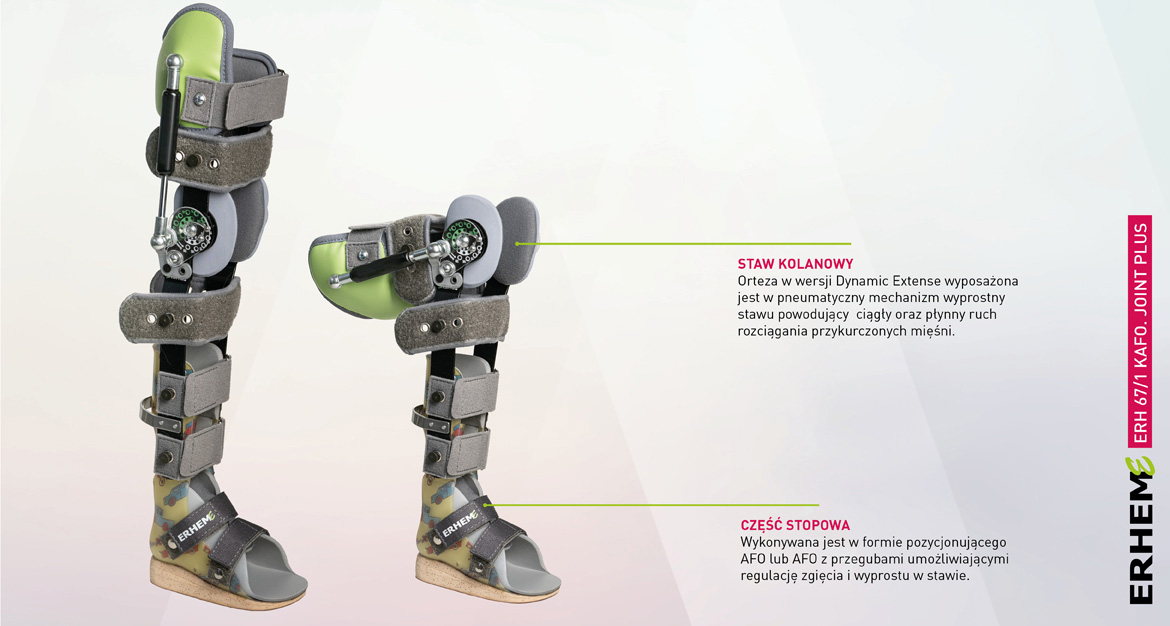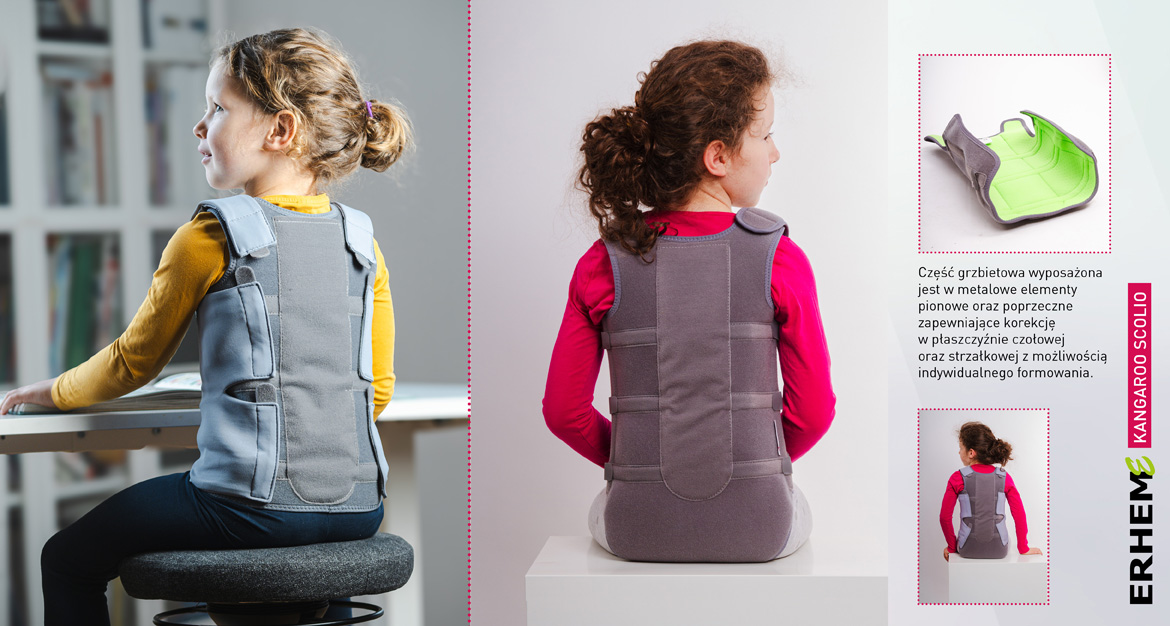


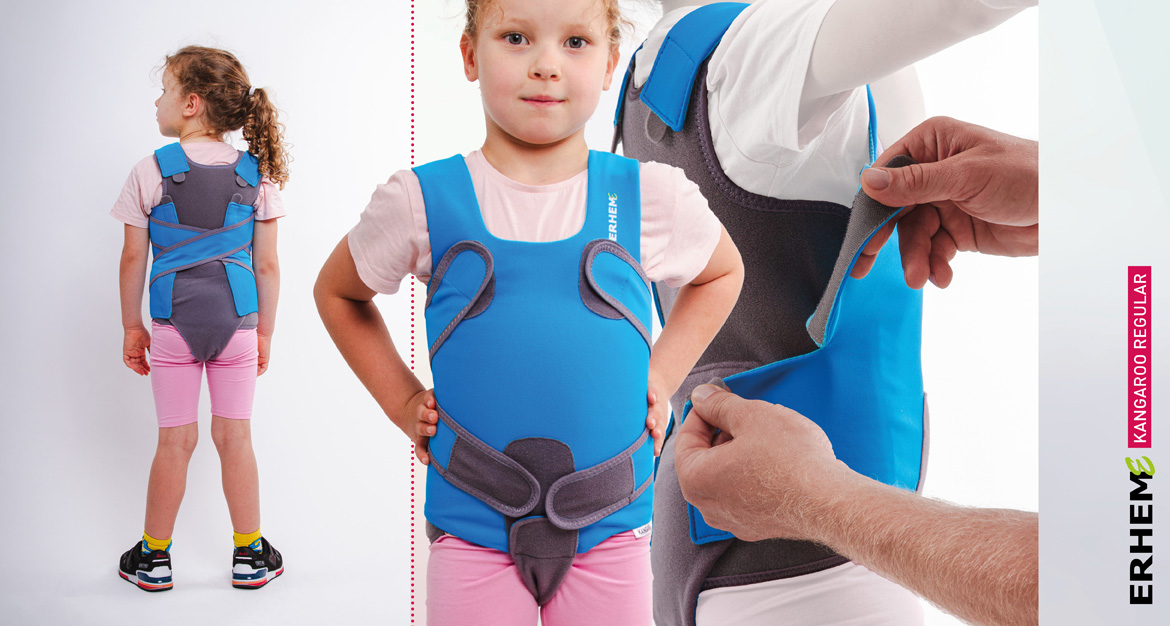
Kangaroo REGULAR, Dynamic postural stabilizer.
-
Children with neurophysiological disorders (cerebral palsy, psychomotor developmental delay).
-
Spina bifida.
-
Muscular dystrophies.
-
Down syndrome.
-
Sensory integration disorders involving sudden loss of balance and gravitational insecurity.
- Stabilizes the trunk and pelvis.
- Corrects excessive anterior or posterior pelvic tilt.
- Corrects shoulder protraction and retraction.
- Facilitates spinal elongation.
- Supports the development and maturation of a normal postural reflex mechanism.
- Enables and facilitates the development of equilibrium reactions and protective extension responses.
- Facilitates postural correction in children with intermediate stages of postural hypotonia.
- Supports the development of sensorimotor integration.
Compression provides positive effects by improving functional status, enhancing postural stability, and reducing involuntary movements.
The orthosis is a trunk garment made of elastic material, individually manufactured to meet the child’s needs. It provides support and control while still allowing movement.
The Kangaroo orthosis is individually manufactured each time based on collected length and circumference measurements.
The compression base of the Kangaroo orthosis, depending on individual indications, the child’s functional abilities, and biometric factors such as age, weight, and height, is available in different forms.
- The Basic form is intended for the youngest patients who demonstrate activity in lying positions and low postures, such as crawling, quadruped positioning, and attempts at sitting.
- The Easy form, a two-piece design, allows easy donning for heavier, often bedridden patients. It is mainly intended for older patients to improve stability in sitting or during verticalization. In this version, the use of a stronger, stiffer material is additionally recommended to enhance stabilization and unloading effects.
- The Zip-Zap form with a central zipper allows easy and quick donning and doffing of the orthosis. It is mainly intended for older patients whose body circumference and trunk length prevent donning the orthosis like in the Basic form. The Zip-Zap version includes a crotch fastening to facilitate hygiene and sanitary procedures.
- The Pants form with leg sections and a central zipper is mainly intended for ambulatory patients. By encompassing the pelvis and thighs, the orthosis supports the function of the gluteal muscles and thus improves alignment and stabilization.
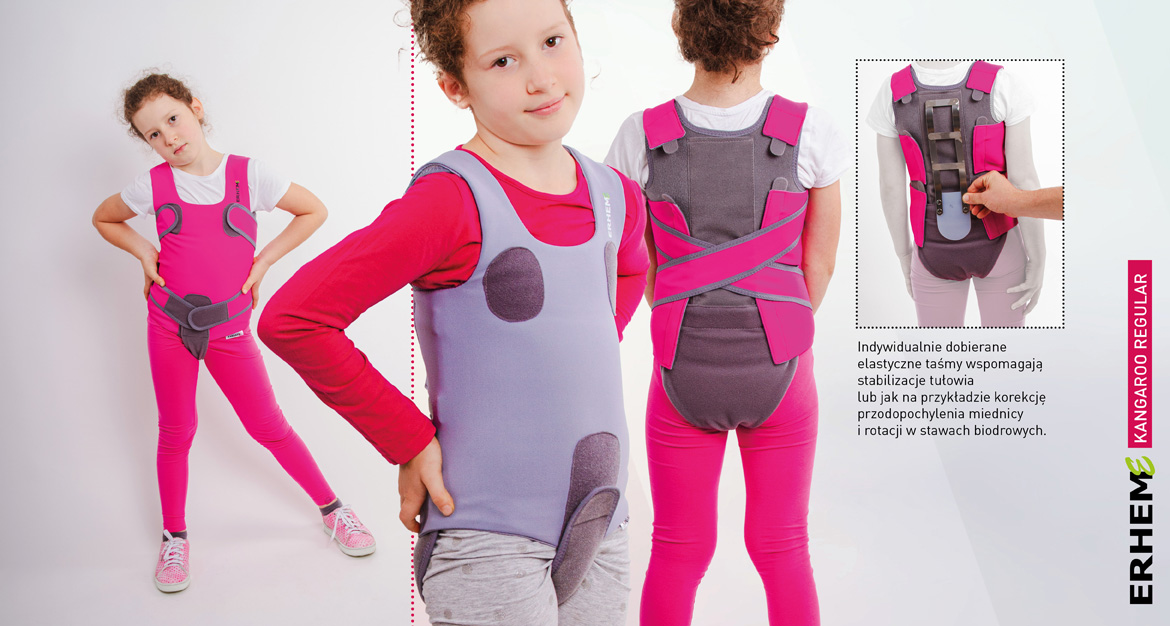
- The Regular form features an additional front layer of Lycra and side adjustability of tightness, improving ease of use. Its two-piece construction facilitates donning. It includes additional dorsal stabilization with shaping capability.
- The Regular Pants form is designed to improve both static and dynamic conditions of the trunk and overall body posture. It is a two-piece suit with double compression strength, allowing smooth circumferential adjustment along its entire length. It features elastic hip joint stabilization via a V-panel.
Stabilizing or corrective elements take the form of elastic straps, dorsal frames, or anatomically contoured plastic components, which—depending on their configuration—can support trunk extension or flexion, as well as correct posterior pelvic tilt, shoulder retraction, or protraction.
The number, type, and configuration of these elements are selected according to the individual needs of the patient.
The material used in the orthosis is a combination of two very thin knitted fabrics. The outer layer is a highly durable and elastic fabric with compression and tightening properties. The inner layer, in direct and long-term contact with the body, is natural cotton designed to ensure comfort and safety during use.
This combination provides excellent ventilation and airflow while maintaining good compression and tightening properties of the material.

ERHEM products are eligible for reimbursement of purchase costs provided by:
To apply for reimbursement for any standard or custom orthotic product, follow the procedure below:
- The general practitioner issues a referral to a specialist.
- The specialist or physiotherapist issues a prescription (application) for specific orthopedic equipment. In the case of a physiotherapist, it is possible to obtain a prescription only for standard equipment. Custom-made orthotics are prescribed by a medical specialist.
- The confirmed prescription (application) can be fulfilled at a medical supply store or orthopedic workshop.